What's new in QuickBuild 16.0
QuickBuild 16.0 adds support for Java 25 LTS, rewrites the tray monitor in Rust to run on modern Windows, MacOS, and Linux, enhances build subscriptions with user filtering, displays build request variables, supports reserving artifacts matching custom conditions, allows specifying prompted variables only when requesting builds via the RESTful API, allows to specify parent configuration for variables prompting for select configurations, and more
The free license is already included
- Java 25 LTS support
- Rewrites tray monitor to run on modern Windows, MacOS, and Linux
- Enhances build subscriptions with user filtering
- Statistics on build queue wait times
- Displays build request variables
- Reserves build artifacts matching custom condition
- Allow specifying prompted variables only when requesting builds via the RESTful API
- Able to edit version after build finishes
- An option to disable log4j configuration file sync between server and agents
- Allows to specify parent configuration for variables prompting for select configurations
- Trims Perforce large change sets to avoid memory overflow
- Mark configuration as favorite from configuration overview
Java 25 LTS support
Officially supports Java 25 LTS for QuickBuild server and agent
Rewrites tray monitor to run on modern Windows, MacOS, and Linux
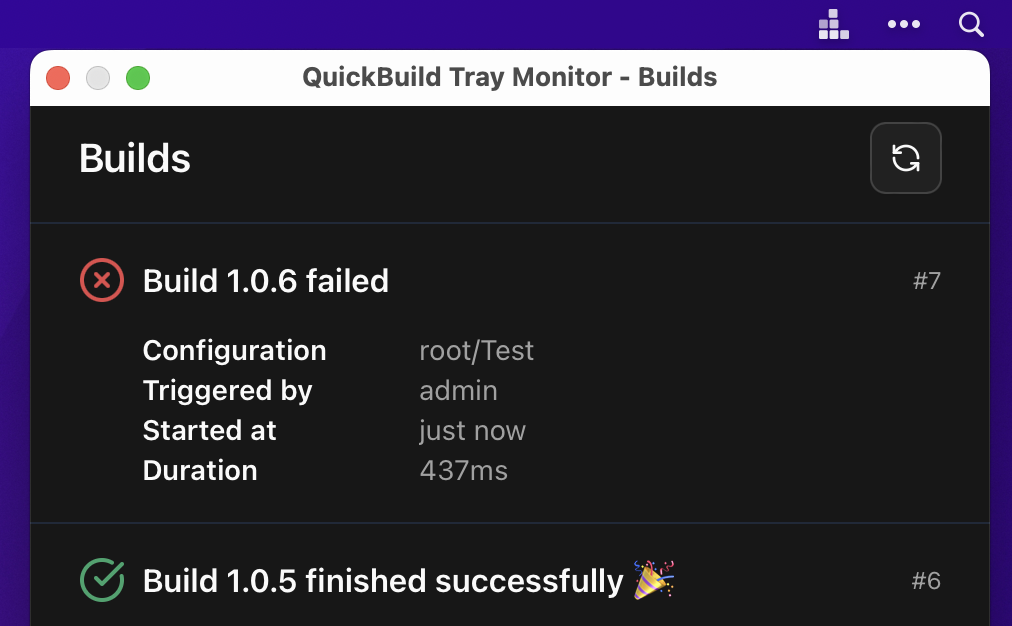
In this version, we rewrite the tray monitor in Tauri (based on Rust) to run on modern Windows, MacOS, and Linux. The new tray monitor is more stable and responsive than the old one. And the new tray monitor uses much less system resources than the old one. Also, the new tray monitor can update itself automatically when a new version is available, so users don't need to worry about keeping it up to date.
You can download the tray monitor from Github releases.
Enhances build subscriptions with user filtering
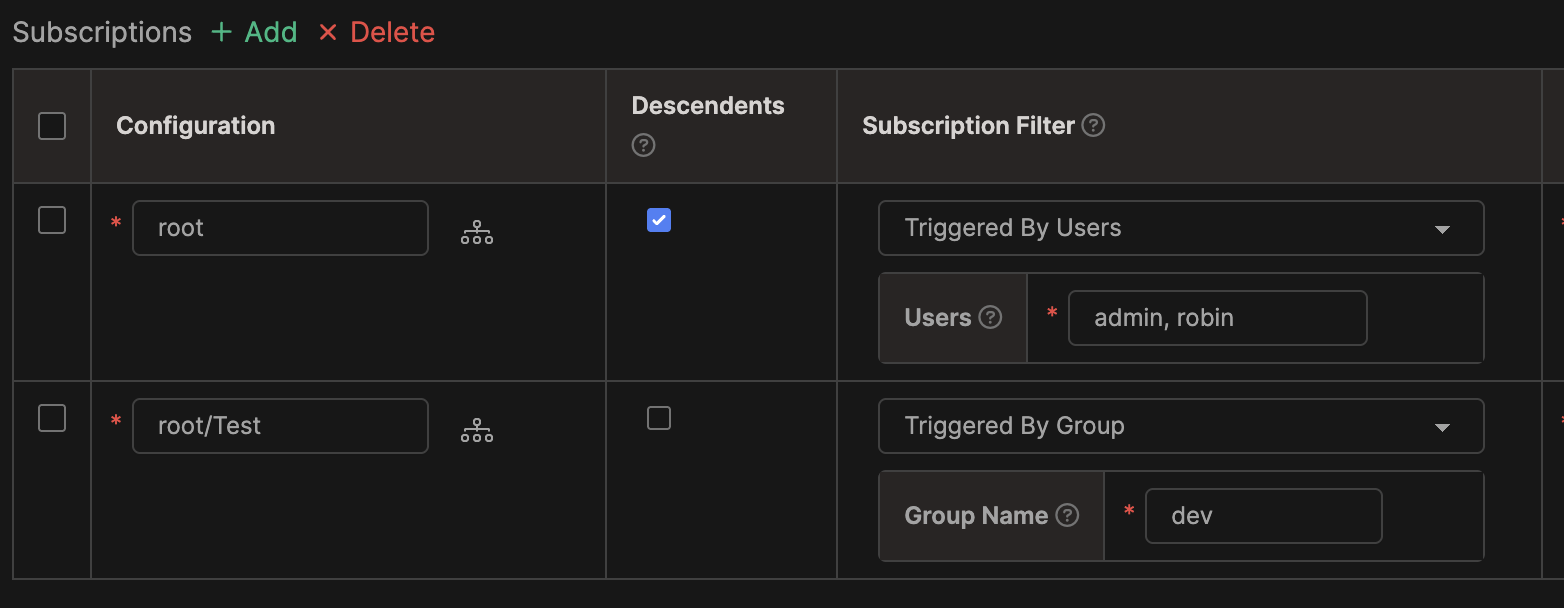
Now, you can not only filter the build notifications committed by you, but also filter the build notifications triggered by specified users or groups. This can be achieved by adding a new filter in build subscription settings, and specifying users or groups for the filter.
Statistics on build queue wait times
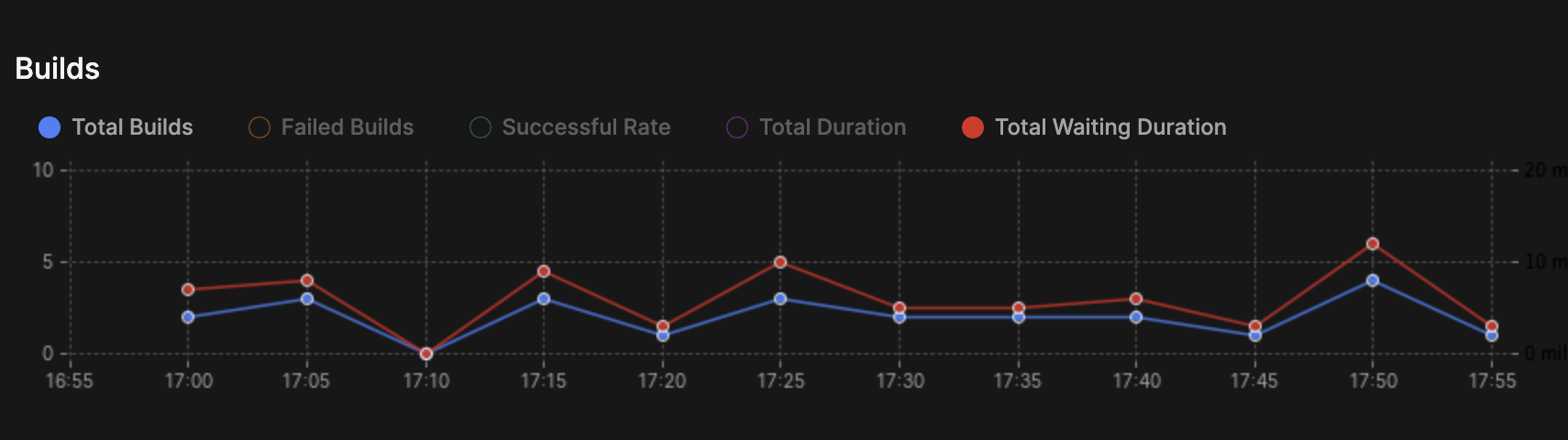
Now, we add a new metric to show the average wait times for builds in the queue so that users can monitor the build queue status and optimize the build queue. You can not only see the build wait times in a specific configuration:
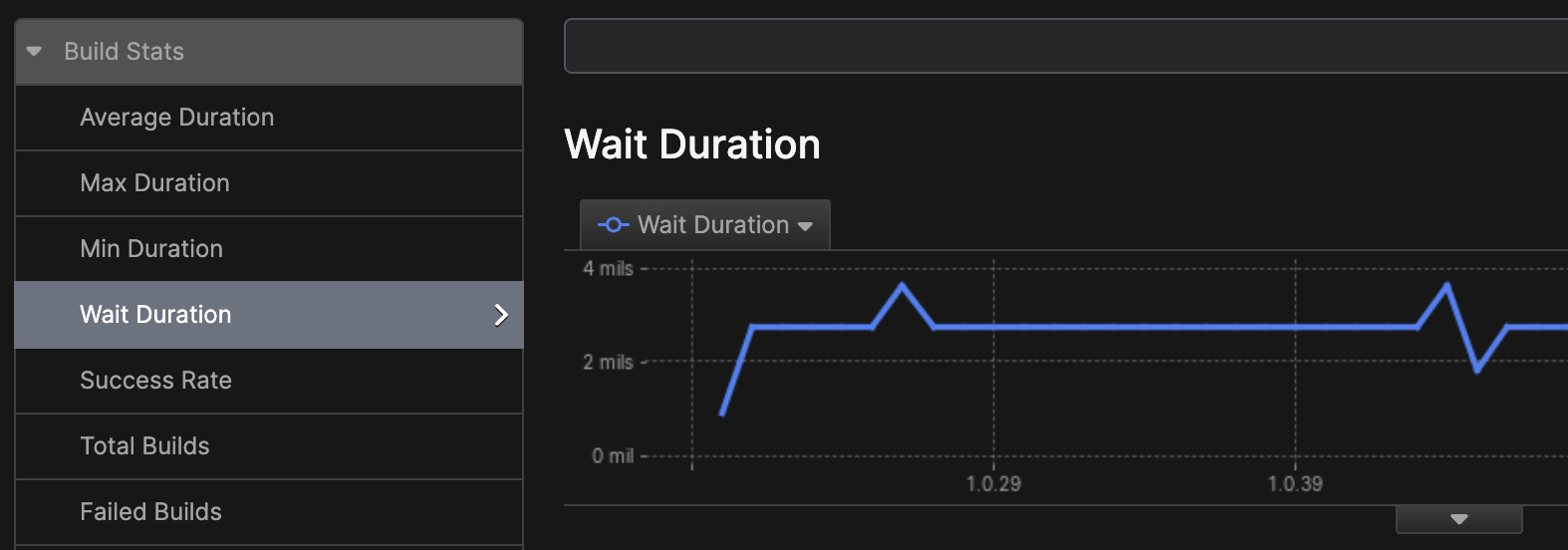
but also see the build wait times in system level from Grid build measurements.
Displays build request variables
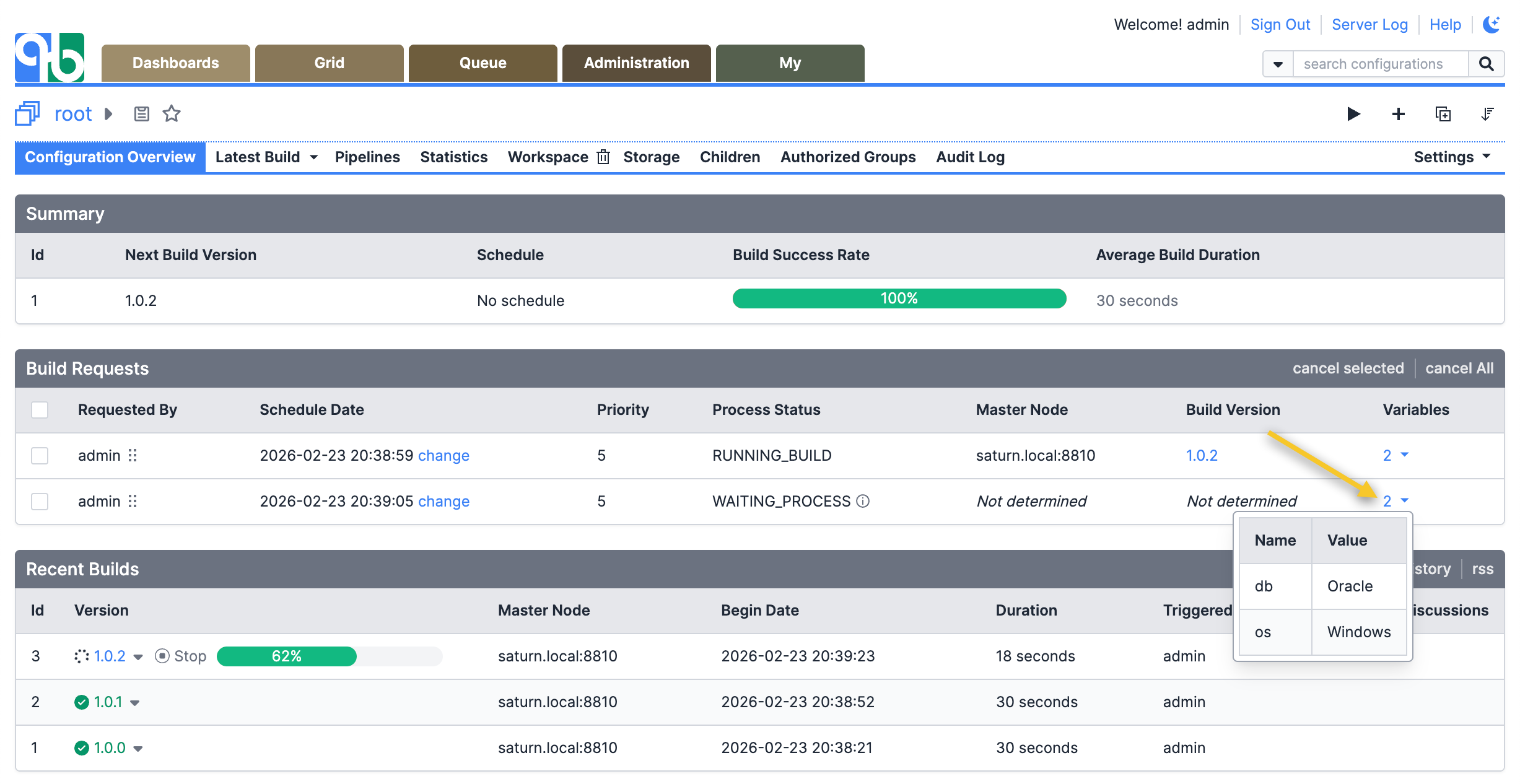
Now variables specified for build requests can be displayed, both in configuration overview page, and in the queue page
Reserves build artifacts matching custom condition
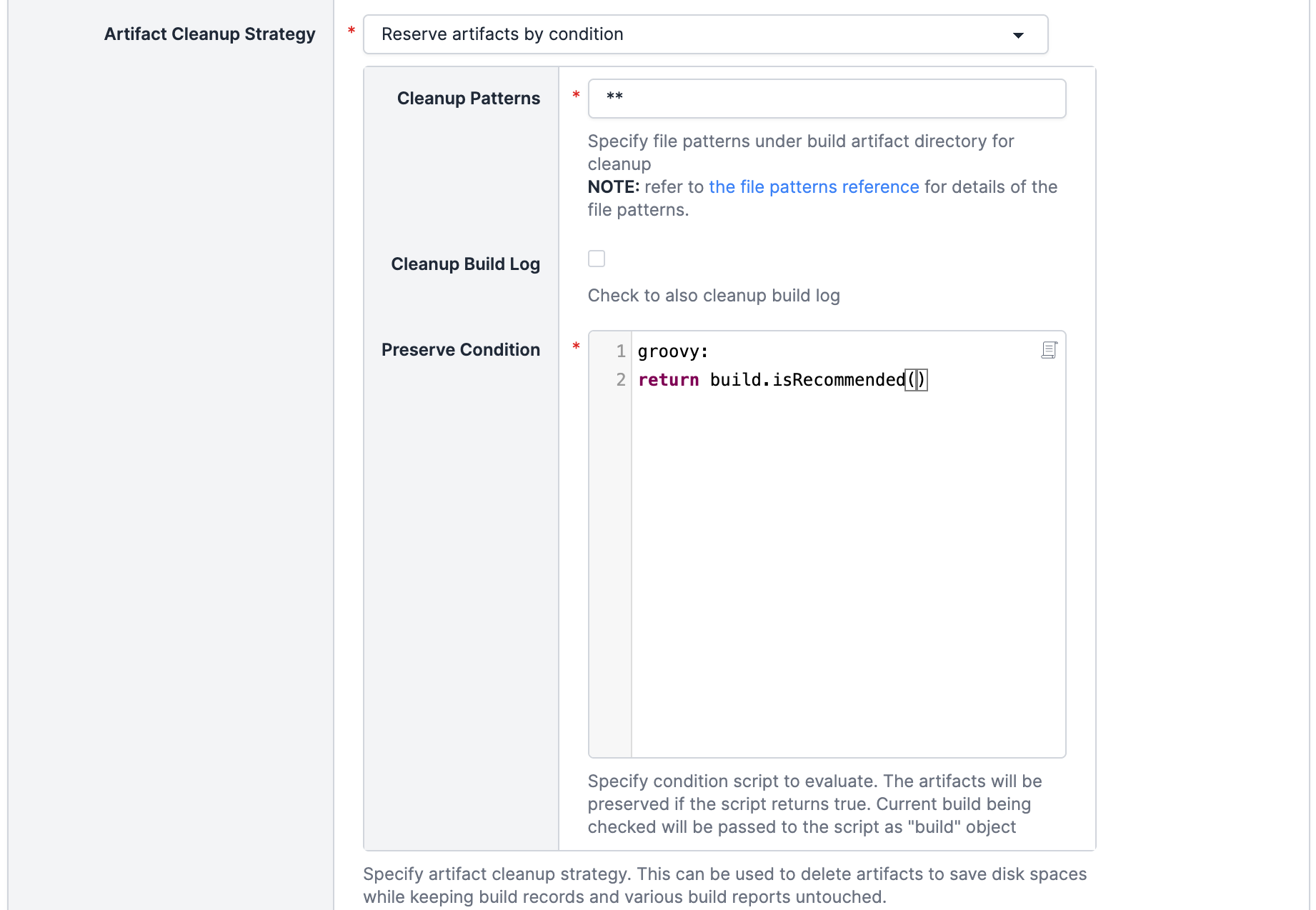
In advanced settings of a configuration, the build artifacts cleanup strategy has a new option to only preserve artifacts for builds matching specified condition
Allow specifying prompted variables only when requesting builds via the RESTful API
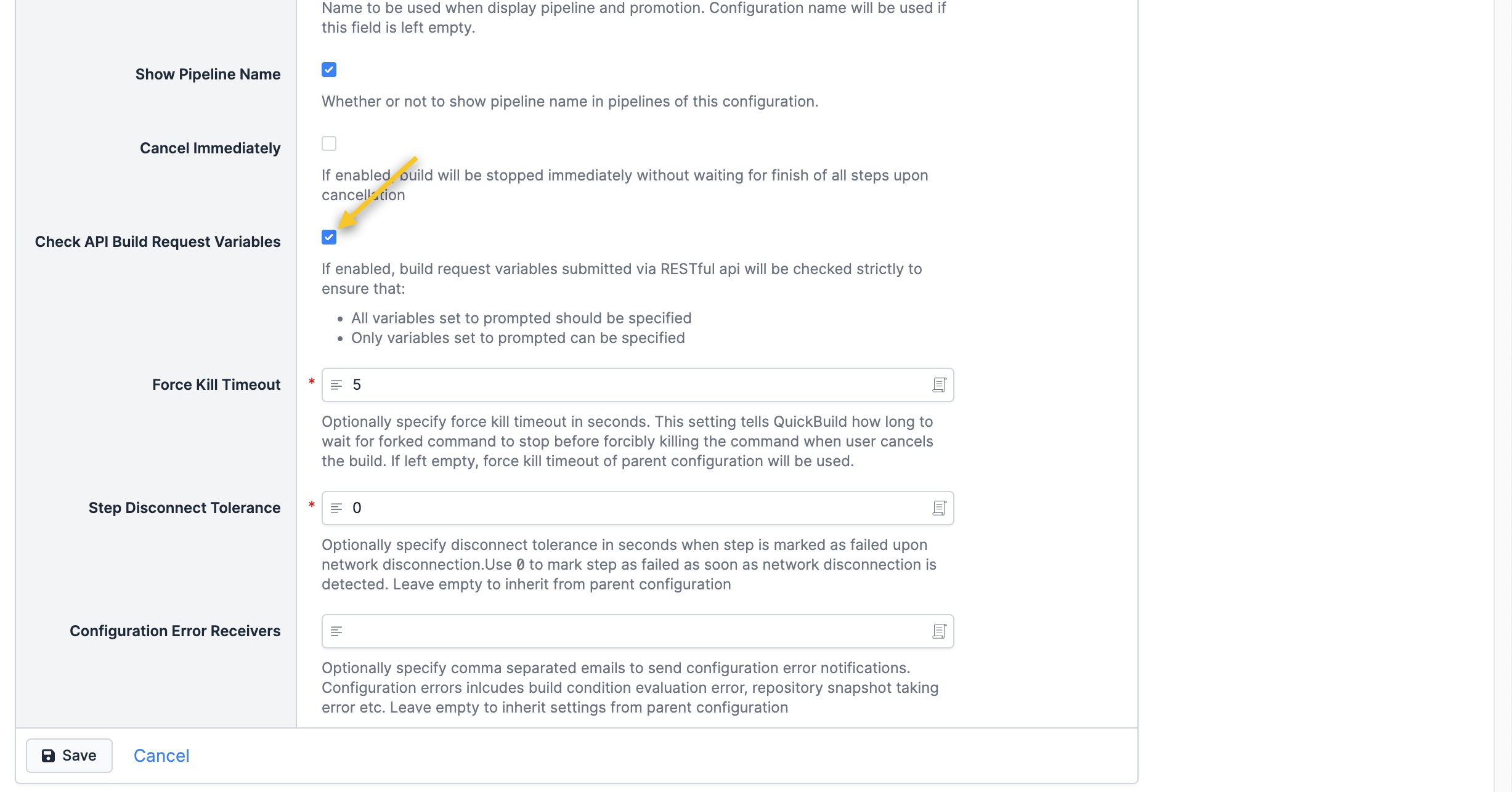
When trigger a configuration via RESTful api, a new option in advanced settings of the configuration is added to make sure that the RESTful api can only specify variables set to prompt, as if the user is triggering build manually via UI
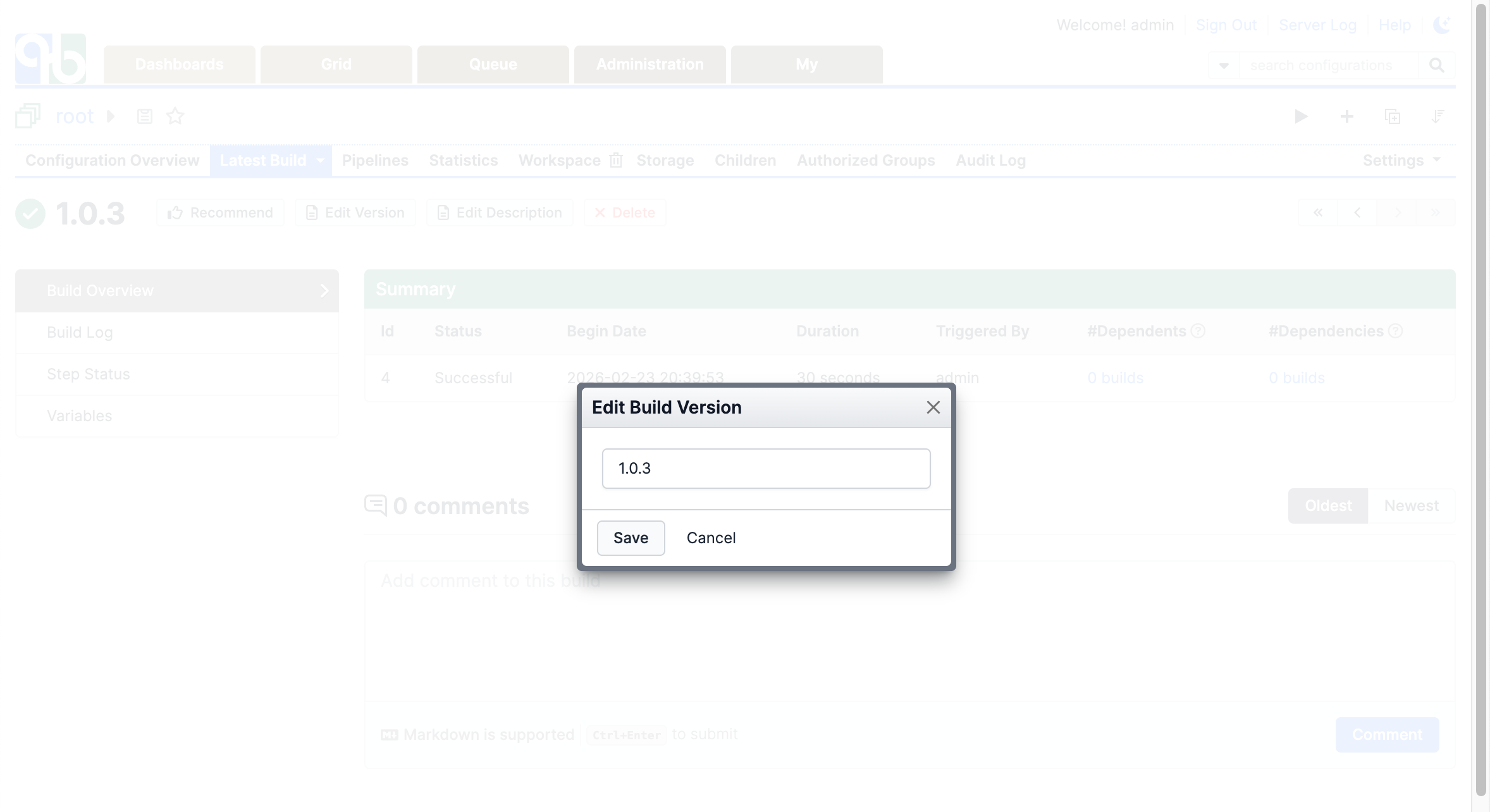
Able to edit version after build finishes
Build version can now be edited/changed even if build is finished
An option to disable log4j configuration file sync between server and agents
When log4j configuration file (conf/log4j2.xml) is changed for server, it will be synced to all agents by default after server restart. If you want to maintain separate log4j configuration for an agent without syncing, set option wrapper.java.additional.1000=-DsyncLogConfig=true in conf/wrapper.conf of that agent
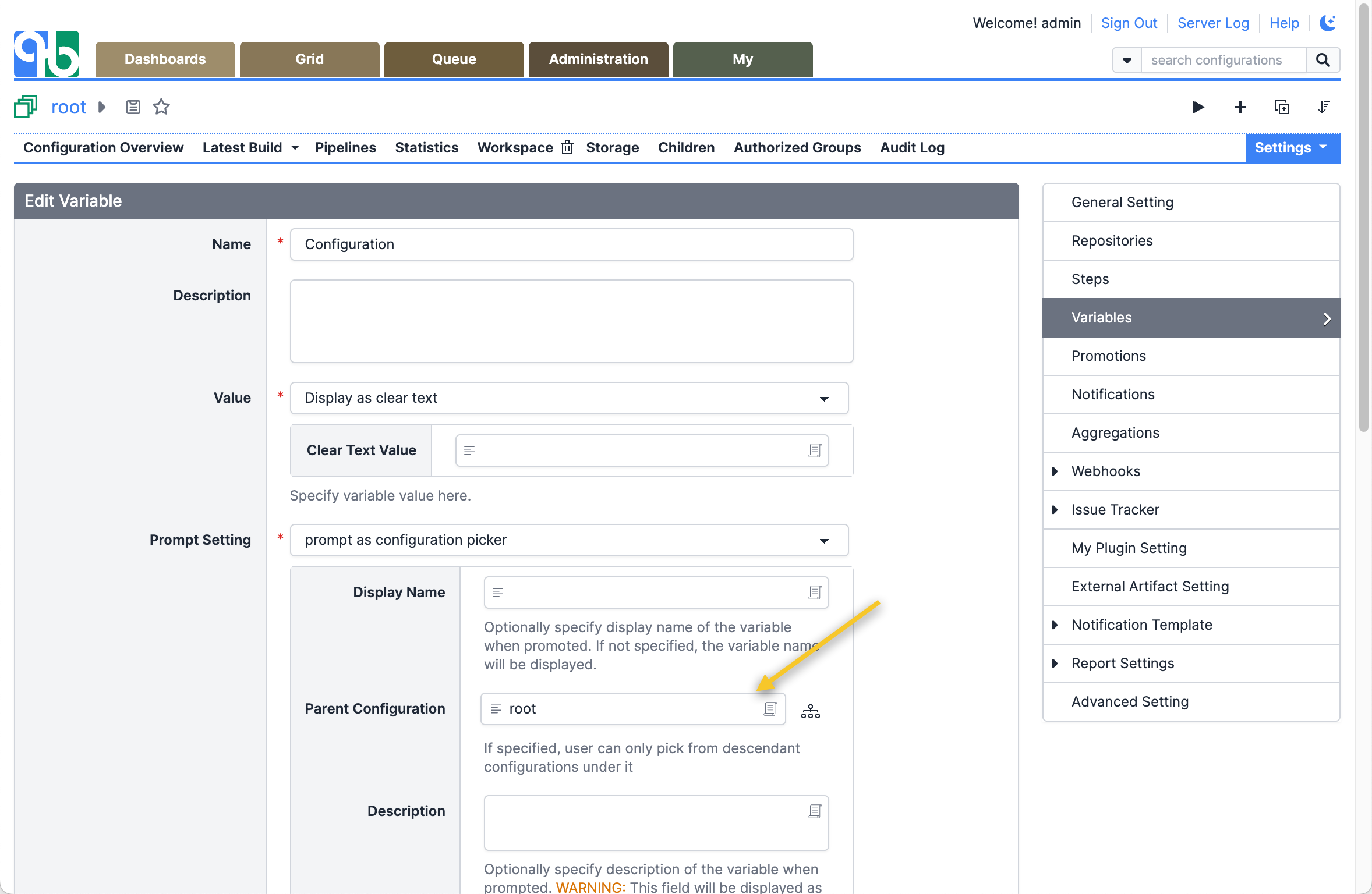
Allows to specify parent configuration for variables prompting for select configurations
When use a variable to choose configuration, you may want to limit choosable configurations inside certain configuration tree. This can now be achieved by specifying a parent configuration for the variable prompt settings
Trims Perforce large change sets to avoid memory overflow
Perforce repository can contain a lot of files and change sets between builds can be very large to cause out of memory issue. The large change sets will be trimmed to show recent change sets in this case
Mark configuration as favorite from configuration overview
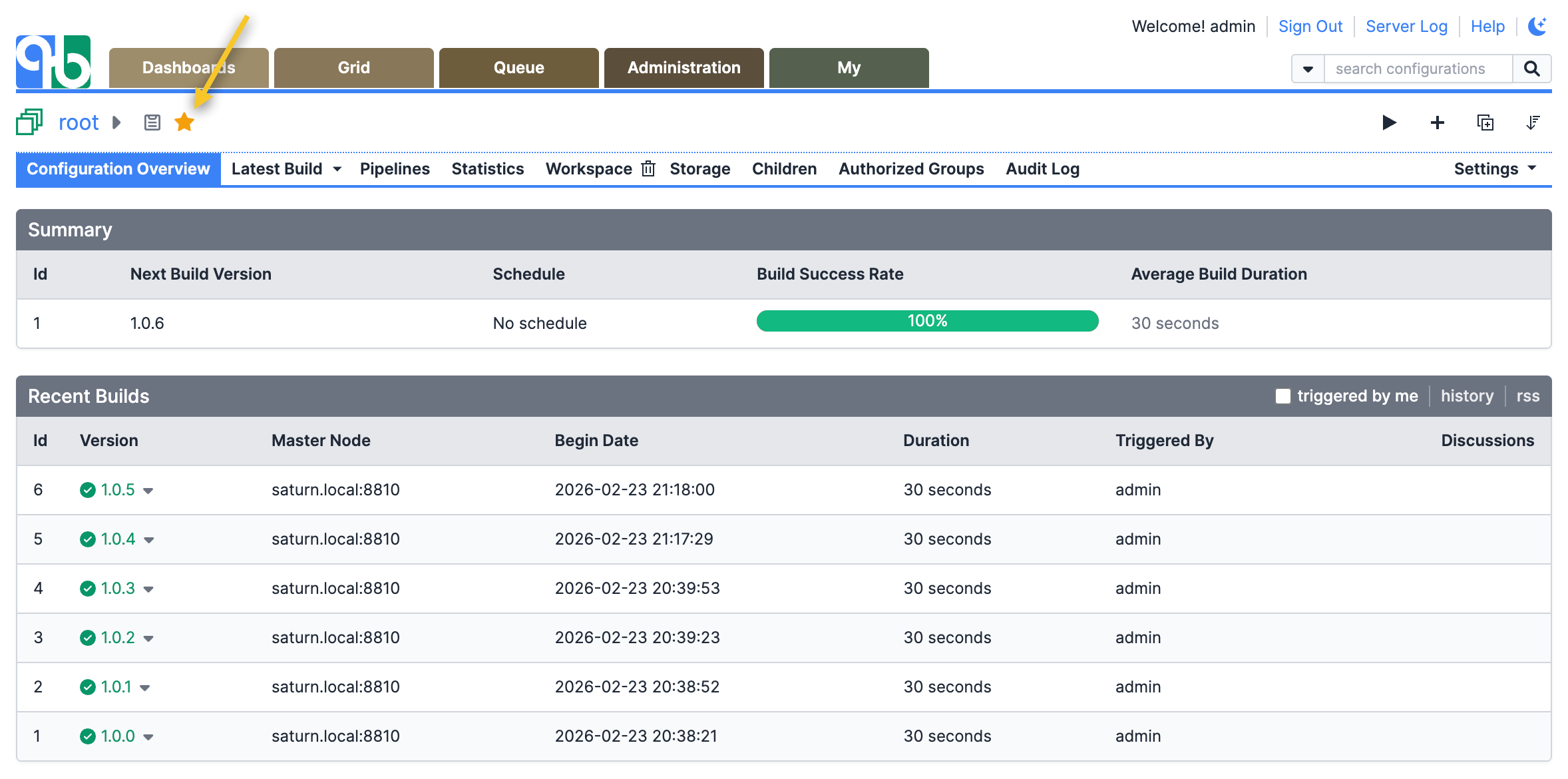
Besides mark configuration as favorite from configurations page, it is also possible to do so in configuration overview